
Why use a virtual lab when students need real practical skills?
A virtual lab gives students more chances to investigate when equipment, time or access is limited. It uses a simulation: an on-screen version of an experiment. Students choose what to change, see the result the software shows and try again.
Sometimes the obstacle with the physical experiment is getting started at all. One former electrical engineering student recalls a lesson that needed an oscilloscope: a piece of equipment that shows electrical signals on a screen. None of the oscilloscopes in the lab worked. Their group of about four had to buy small electronic parts to get one working. Repair can be a useful lesson, but completing an assigned experiment should not depend on students finding spare parts first.
A simulation gives students a way to explore the ideas behind an experiment even when equipment is unavailable. If the learning goal also includes handling real equipment, physical practice helps develop those skills.
The chance to try again
Imagine a class investigating photosynthesis, the process plants use to make food using light. The class compares covered and uncovered parts of a leaf, then tests for starch, a form of stored food. One school method includes about 48 hours of plant preparation. Repeating the experiment needs another prepared leaf and more time in the light; how long it takes depends on what is already prepared. See the practical method.
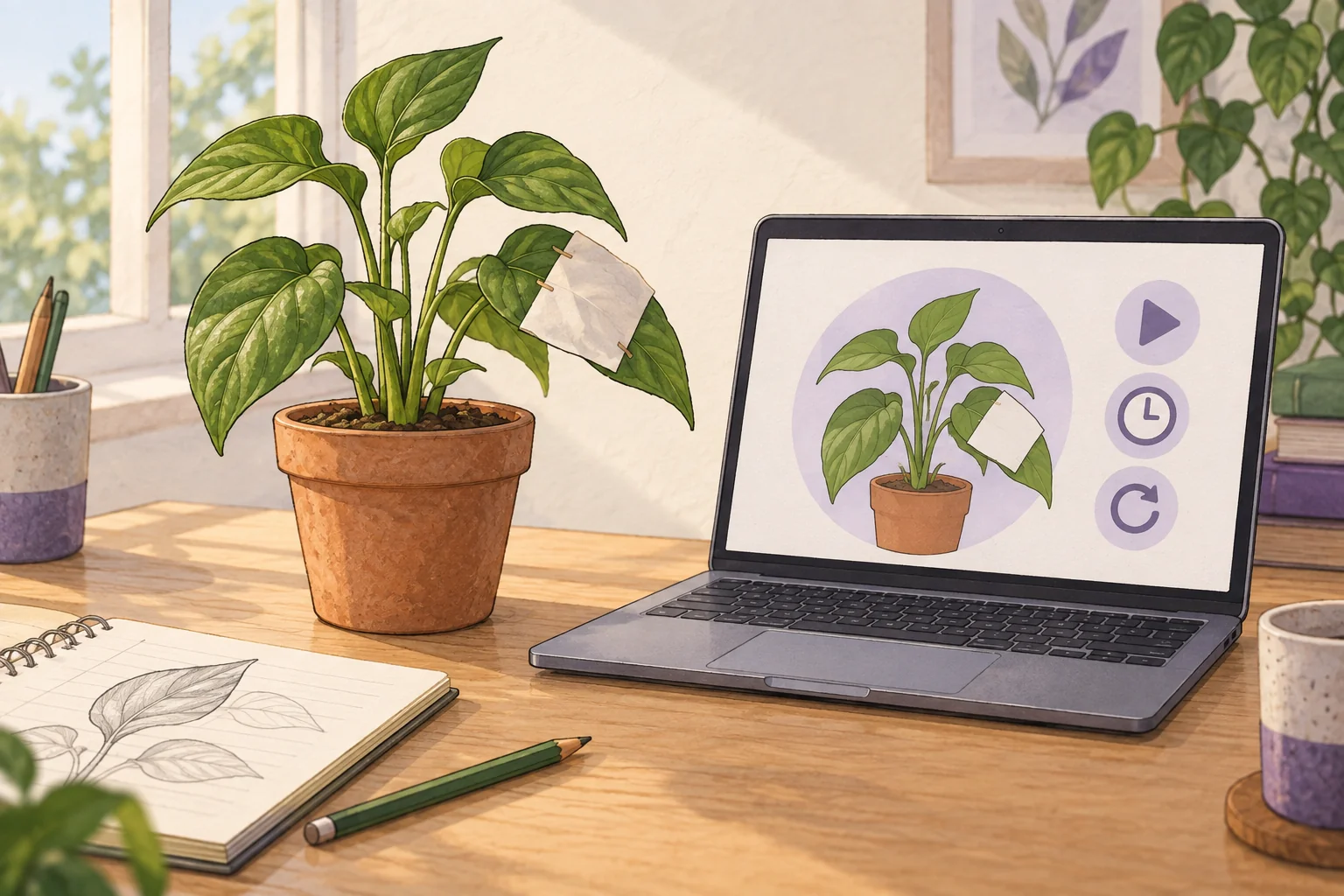
In a virtual simulation of this experiment, students choose which part of the leaf to cover and say what they expect to happen. They move the exercise’s clock forward, look at the result and start again with a different part covered. The teacher asks what changed and whether the result was what they expected.
Those results follow rules built into the simulation. They help students explore the idea; they do not provide new evidence from real plants. Students can use the simulation to understand the concept without carrying out the physical experiment themselves.
The useful part is being able to repeat the experiment with a different choice. A student can follow up a question while the learning is still fresh, without waiting for another experiment with real materials. The on-screen clock skips the wait in the exercise; the real plant still takes its own time.
What do students need to learn?
A virtual lab can be a lesson on its own. In the plant example, students can explore the role of light, make predictions and explain the simulated results. It can also support a physical lesson when that serves the learning goal.
A useful virtual lab asks students to make choices and explain their reasoning. A student might follow every instruction on screen without understanding why each step matters. In the leaf experiment, asking what they expect to happen to the covered part of the leaf—and why—helps the teacher see what they understand. The result then gives the class something to discuss, especially if it differs from their predictions.
A virtual lab can also help students recall the correct sequence of steps. Suppose a student remembers the leaf experiment but is unsure which step comes next. The simulation could ask them to put the steps in order, offer hints where needed and explain why the order matters. Working through the sequence again helps them revisit both what to do and why.
The choice depends on what students need to learn:

An experiment can serve two main learning objectives. One is to understand a concept and remember its key ideas—for example, the role of light in photosynthesis. A virtual lab can give students a way to explore that concept and revisit what they have learned.
The other main learning objective is to become proficient at carrying out the experiment, as a trainee laboratory technician would need to do. That requires practice with real materials and equipment: handling them safely, following the procedure and making observations. A simulation can help students learn the procedure, but completing it does not demonstrate that they can perform the physical task independently. For the leaf experiment, practice with chemicals and hot liquids needs appropriate supervision. See the practical guidance.
When is a simulation worth it?
If students only need to see how an experiment is done, watching a teacher or a video may be enough. If they need a reminder of the steps, clear written instructions may do. A simulation offers something more: students can choose what to do, see the result and try again. This is especially useful when equipment is shared, materials are costly, experiments take days or a teacher must be present to watch and guide the work.
Creating a simulation starts with the learning goal: what students should be able to explore, understand or recall. That goal shapes the choices students can make, the results they see and the explanations they receive. Building it also takes time for checking and maintenance as devices and software change.
The teaching team helps check that the science is accurate and that simplifying the experiment does not mislead students. Testing on students' devices, including with learners who have disabilities, checks whether they can use the controls and understand the results.
If you are considering a virtual lab simulation, you can contact Crownzcom and explain what you teach, what students find difficult and what stops them getting enough practice. You do not need to know how the software would work.
Three questions can help frame that conversation:
- What do students need to understand or practise again?
- What currently limits that practice: equipment, materials, waiting time or a teacher’s availability?
- Which parts still need real materials and a teacher present?